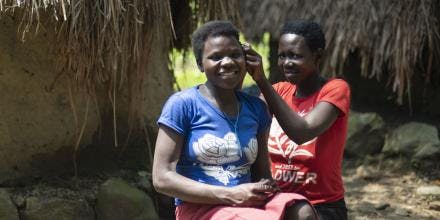
Sex workers report unexpected benefits of PrEP and HIV self-testing
Interviews with sex workers in Uganda highlight economic and relationship benefits alongside advantages for sexual health
News | 01 October 2021
Interviews with sex workers in Uganda highlight economic and relationship benefits alongside advantages for sexual health
Survey in Western Kenya suggests 40% have gone without food and one third have lost out on income or education
Global evidence review suggests psychosocial support improves young people’s adherence to HIV treatment but is less successful at reducing sexual risk taking
Unmarried men in Ghana who see or hear family planning messages in the media are 50% more likely to consistently use condoms
An evidence review has identified the main gaps in health systems in sub-Saharan Africa that need to be addressed to boost PrEP (pre-exposure prophylaxis) scale-up
The experiences of girls and young women living in informal settlements in Uganda highlight the link between poverty and sexual violence
Research suggests Nigerian women are using misoprostol safely and effectively, despite having low knowledge on how it works.
Interviews with HIV clinic staff said the project shifted their views of young people with HIV and gave them a better understanding of the issues they face
The first pilot to offer PEP to people in parts of Kenya and Uganda with high HIV prevalence results in good uptake and no HIV infections
Research in Nigeria finds young women want to use contraceptives but judgmental attitudes make this difficult to do
Personal risk, stigma, inconvenient clinic times and locations all influenced people’s decisions to stop using PrEP
Findings suggest empowerment initiatives are needed as young women continue to rely on the withdrawal method to please their partners.
There’s been a lot of false information going around about COVID-19 vaccines, so it’s natural to have some questions. Here, we put the record straight with the key things you need to know.
Inconsistent condom use and other risky practices particularly common among women and those with limited HIV knowledge, highlighting the need for comprehensive sexual health education.
Providing a variety of ways to test for HIV resulted in high rates of young people coming forward and reduced the gap between men and women.
Testing rises 40-50% in 10 years, but half of young men and one-third of young women are still not coming forward.